“BIG ORANGE CARD.”

We were asked to use two pieces of A3 card and use it to interact with the public.

  • We decided to speed date the public so we took two chairs, a bottle of Lambrini, a sign and two arrows to Borough Market.
  • We had over 200 (at least) interactions from people walking past and smiling, people taking pictures, people asking why we were doing this (Of course our reply was “Our friend is lonely and desperate”) and about 20 different types of people sitting down to talk to Tally.
  • We met tourists, locals, Sailors, Marines selling poppies and people on their lunch break.
  • This is a selection of images from the day which I edited onto film roll after making the orange card stand out by contrasting it against black and white.
  • I felt that individually these images were unsuccessful due to composition and the busy backgrounds which meant that the sign was not emphasised.
  • Now I think the series of images being tied together on the film roll and connected through the colour scheme created coordination and showed the story of speed dating the public.

I really enjoyed this project as I got to interact with the public and that’s one of the reasons why I love graphic design, the fact that I can communicate with people. This also showed to me the power I have with my graphic design skills no matter how limited they are that I can spread messages through my designs that are more important than “speed dating”, but also can maybe make a change, or be remembered.

“GREEN DAY.”

  • On this day I learnt so much, not necessarily about the graphic design skills but more about how to practice and work as one.
  • I learnt to be more conscious as a designer:
    • To use less paper
    • Reduce unnecessary data storage as it equals the same carbon emissions as the leading airplane company.
    • To promote the importance of reducing climate change.
    • Using alternatives rather than damaging materials.
  • I found it really fun to create this infographic for climate change.
  • From the feedback I got I was told I need to change the colour as it gives the impression of sea level, so an alternative would be grey. I was also told that I should change the size of the raindrops to represent the size of the statistics.
  • Also when it was printed the background looked dark which meant the darker text did not stand out as much which meant it would be harder for the reader to see.

“NEWSPAPER DAY.”

On this day we were asked to bring in a LARGE amount of new papers in to build a sculpture to represent collaboration.

  • We liked Michaela’s logo where words were layered over itself so we decided to do and illusion/design that was altered by view when different parts of the word come together.
  • We had to use a word that was very basic when dissected so we used “link” as it kept the meaning of collaboration but was easier to build.
  • During this exercise it helped a lot of people to simplify their logo however ours was already very minimal however it helped us think about the meaning of our logo and what collaboration means.
  • Although this exercise helped us develop the thought process behind the logo and how to incorporate the meaning into the logo, the word link didn’t have the same effect as the word collaboration. However that was too long so we started to explore alternative words.

“EXPERIMENTATION DAY.”

This day was to push us out our comfort zones and to experiment with different media.

PRINT MAKING”

  • I throughly enjoyed this workshop as I felt I could focus on composition and typographic which are my favourite aspects of design
  • I also thought my print was very successful because the print was strong and bold compared to other prints which made it stand out which is what logos should do.
  • Although the fonts were different and ranged from upper case to lower case the print was cohesive and represented collaboration, through all the different style letters working as a single design.
  • I then scanned I the print and edited it…
  • I cleaned up the image in photoshop then copy it and layered over the original and reduced the transparency using multiply to show the word coming together in a more literal sense.
  • I feel that this final edit looked effective as it emphasised the meaning of the wording an alternative and more obvious way.

“ONLY SCISSORS &PAPER “

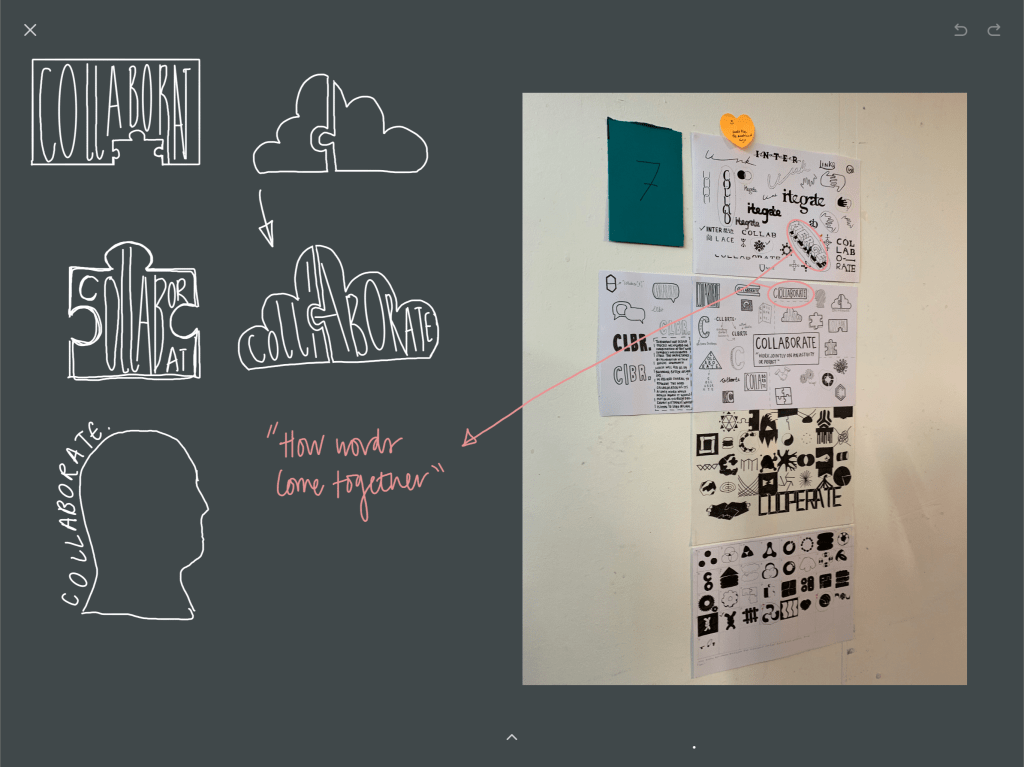
  • At this station we were not allowed to do anything to the upper other than use scissors and paper to create logo while using our advice for Nigel and Paul (How words come together).
  • We found this hard to do with words as as different fonts are harder than others also the word collaborate was very time consuming to do so we though of synonyms that were shorter and took a more abstract approach using positives and negatives.
  • I don’t this a logo it would have worked as it didn’t represent the idea of collaboration that well.
  • However it definitely got me to use different techniques like +/-.

“PLASTICINE DAY”

  • This was probably the the least successful workshop as we didn’t finish it but on the plus side we realised that if logos are to detailed they become less successful in different scales which is highly important if it is to be reproduced for various mediums.
  • This exercise was a blast to the past and super relaxing although it didn’t look the best, it made me realise that something you like may not pleas eater people so you have to be flexible like plasticine.

“LETRASET”

  • This exercise was so much fun because it gave the words which we were exploring more meaning as there was history to the process. I enjoyed the physicality of printing the typography and being able to manually place each letter wherever I wanted so it felt more unique and more like collaboration.
  • I will definitely use this technique again when I need a less neat/organised design with more character and a naturally older effect.

“PHOTOGRAPHY”

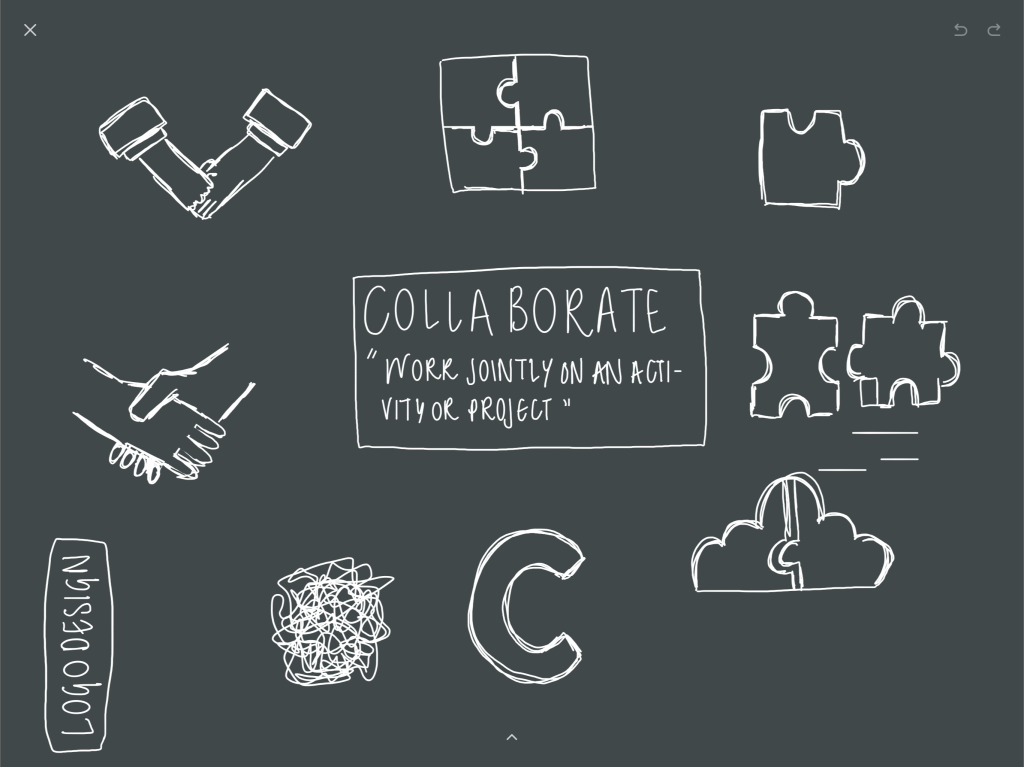
  • With these images we decided to explore more on symbols and images rather than words using holding hands to represent the meanings behind collaboration and the unity of different styles.
  • In my opinion these images communicated the meaning behind the word and would be memorable for my peers to remember that these images stand for collaboration. However if we turned this into a graphic logo I think it wold be cliche and not original which is what is needed to for logos to be successful.
  • The top image is a better image however if the second image was taken better and edited it could have been more successful.

“SELF REFLECTIVE”

REFLECTIVE LEARNING

  • Why am I at uni?
    • Portfolio
    • Career
    • Broaden and develop skills
  • (Andreas Gurkst) – Amazon warehouse

AIMS

  • Introduce learning styles
  • Idea of reflective practice (thinking + writing)
  • Understand how above can help you create
    • Mirrors help reflect and can see things differently but also distort
    • In order Mohave an accurate viewer your work is from someone you work with or you get tunnel vision/ only see your work in a certain way.

REFLECTIVE PRACTICE

  • Powerful
  • Everyday
  • Distorted
  • Planning

“Reflection as a planning tool” – Richard Long

MY LEARNING ENVIRONMENT

  • I don’t mind group work, as it teaches me different ways of viewing things
  • structure
  • Exams do not represent my strengths
  • Enjoy discussions

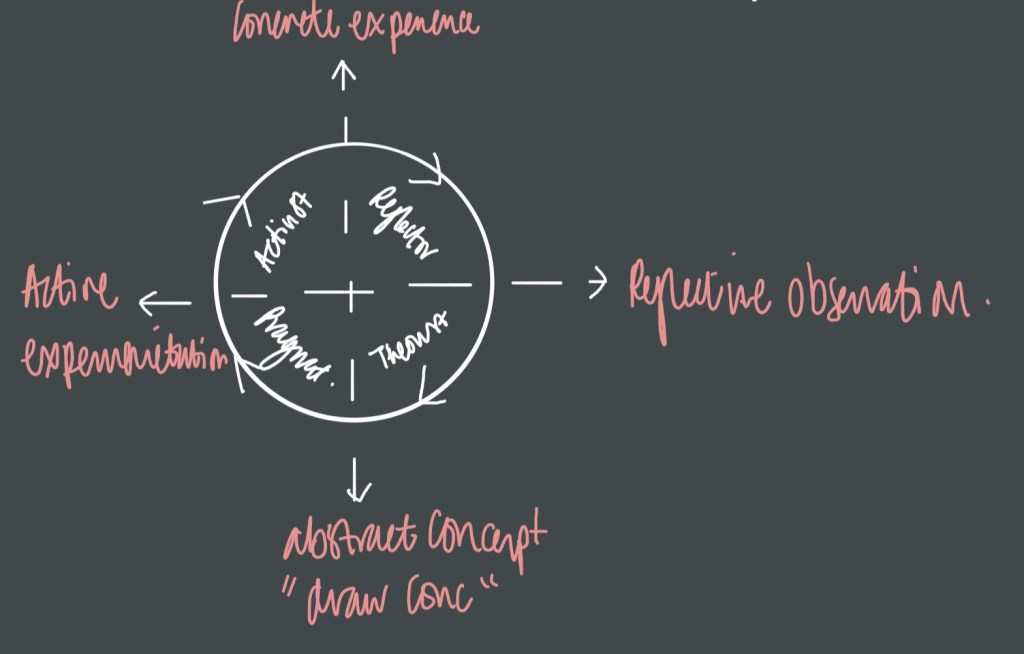
LEARNING STYLES

  • Preferential mode which we like to master
    • REFLECTOR – Stand back and look at situ
    • THEORIST – Analytical people who like to observe
    • PRAGMASTIST – Decision makers + practical
    • ACTIVIST – Involved in new experiences
  • There can be danger due to backgrounds and development as people change + adapt.

Click to access Unit_1_Brief___Week_2.pdf

“LOGO LECTURE”

  • We were given a presentation on signs, symbols & omens.
    • FOR EXAMPLE: Red sky at night, Shepards delight
  • Nigel used an example of his son’s illegible drawing which was called “Billy in the stream” as an example of how things mean different things for people

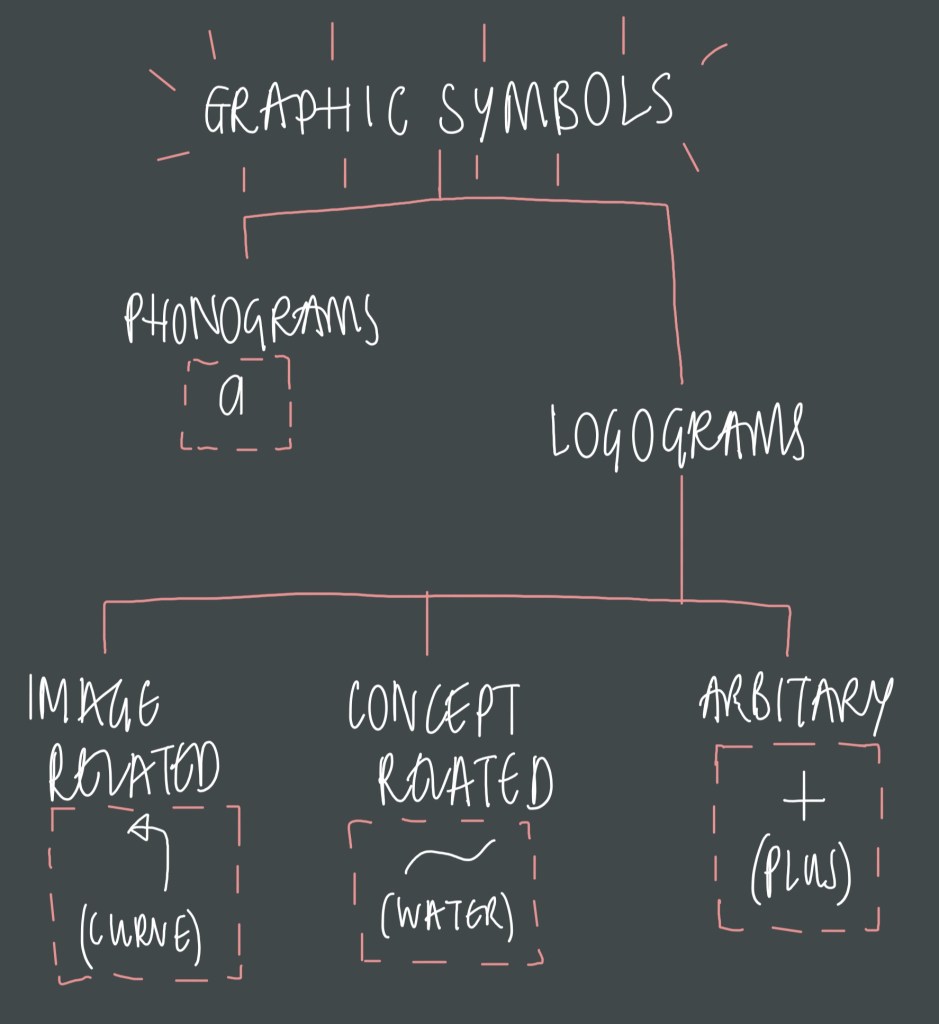
[LITERAL MARKS = ABSTRACT MARKS]

  • EYE = <O>
  • O = Circle (LITERAL), journey, continuous, focus,, infinity (ABSTRACT)
  • The street “John Islip” = eye, slip (slip form a tree)

SIGN & SYMBOL

  • SIGN:
    • Life can depend (specific)
    • message
  • SYMBOL:
    • Represent
    • different meanings to different people (non specific)
  • Logos/symbols must be visible for miles so your logo can be communicated
  • It needs to be able to put its message across @ different distances
  • The way in which you put things across represents the service.
  • Presentation = key
  • Coats of arms = branding of a country
    • Plus ultra/ non ultra = nothing beyond
    • Develop branding
  • Symbols at churches mean stories
  • Signs outside shops like barbers as a recognisable place.
  • Some companies change logos to create friendliness like BP – focused target market aimed logo
  • Has to be able to be reduced but still recognisable
  • Have the same effect at different scales
  • Font can have a great effect or forwardness
  • Logos create differentiation/make something recognisable
  • History of graphic design
  • needs to be re-printable
  • Trademark act – 1875 (red triangle)
  • EAG visual mark is continuous throughout
  • Henry Beck’s Tube Map = simplify and organise
  • Macdonald’s “speede” cartoons/mascots
  • Golden Arches @ Macdonald’s
  • Universal safety signs

THE USE OF ANIMALS TO SYMBOLISE:

  • Penguin books – Black and white
  • Jaguar car – Sleek, fast, streamline
  • HMV – Listening to the sound
  • Visual recognition – Crown Jewels
  • Positive + negative = national grid
  • BEWARE of mix interpretation

TYPOGRAPHIC:

  • V&A – Museum, represents old + modern mix
  • Doesn’t have to be obvious
    • Macdonald’s
    • Mercedes

CONCLUSION…

  • There are a variety of interpretations in society
  • An example of how symbols can be developed = hieroglyphs/markings—->western alphabet (oxhouse = alphabet)

Click to access logos_seminar_2019_lo_res_3.pdf

“LOGO DESIGNING”

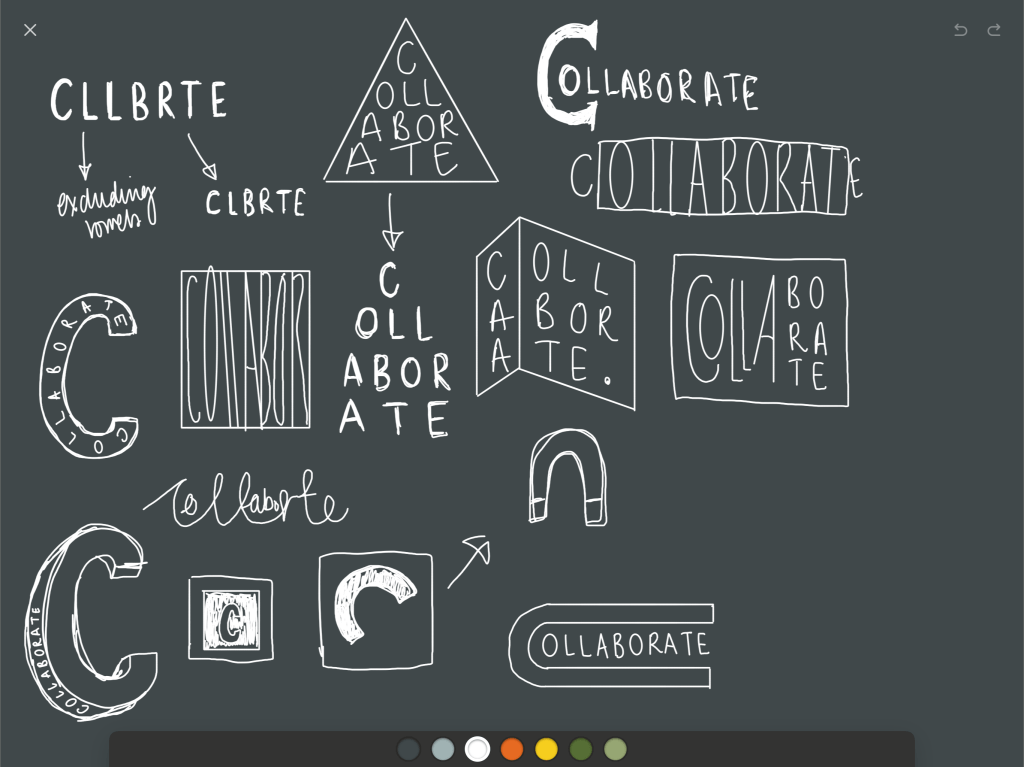
  • My initial designs tend more to be images which I simplified to represent the meaning of “collaborate”. However I felt they were unoriginal and cliche which made them boring.
  • I then started to incorporate the word collaborate and explore how I could represent the meaning of the word , for example the letter pyramid of the word to represent the words coming together, however with this logo and a lot of my others, the word would not have been visible at different scales and is also to “wordy” and would not catch someones eye.
  • When we handed in our first 33 logos my group all used alternative styles when designing the logo.
  • Me and Michaela focused more the word, Jairun and Anna focused more on shapes. This inspired me to incorporate more shape into my logo and use them to represent collaborating.
  • From the feedback we got we were told to focus on “How words come together”, so from this I tried to think of other words to represent the meaning of collaborate that were less wordy.
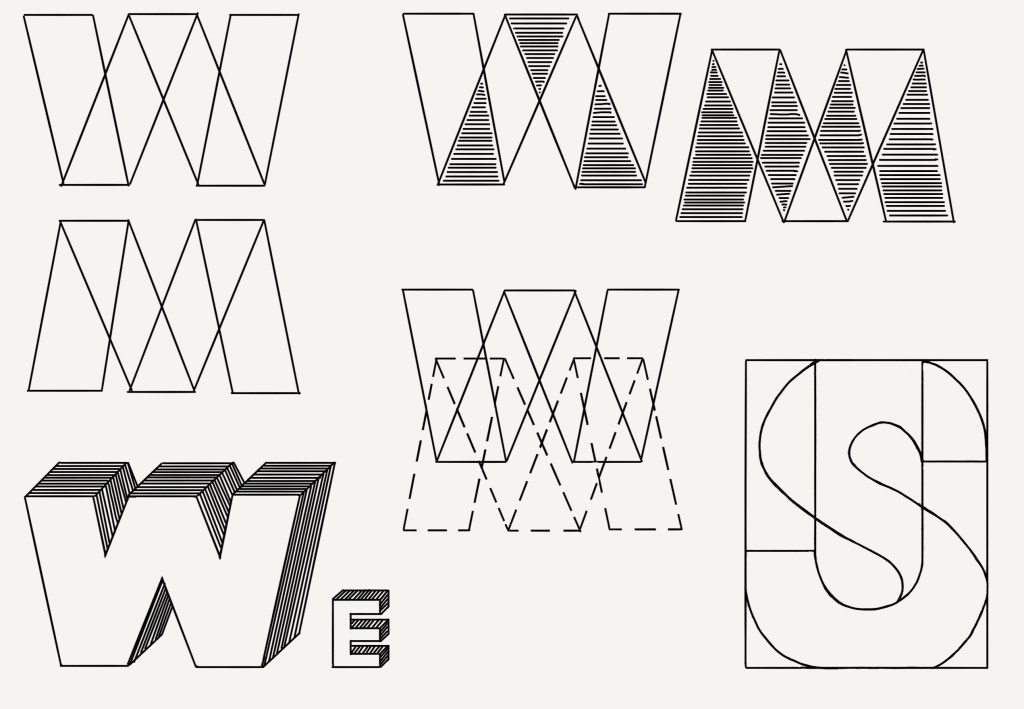
  • I came up with “we” and “us” and decide to dissect the words and physically see how they come together, to create a more effective logo because the word isn’t as long.

AFTER TABLE TOP TUTORIAL…

  • FEEDBACK:
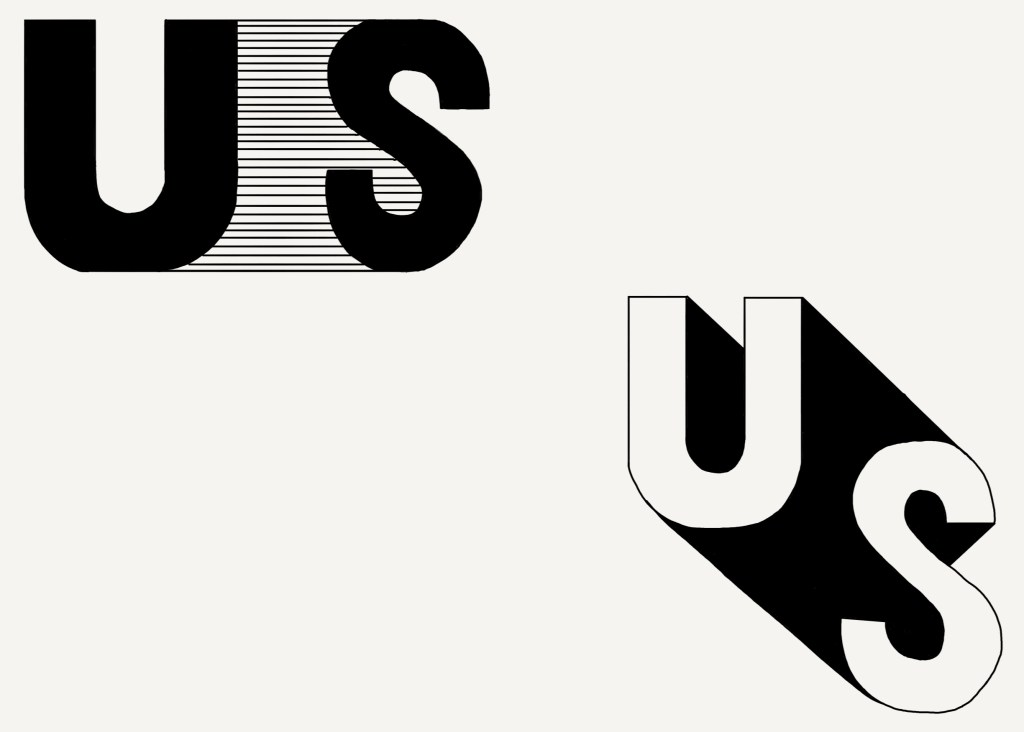
    • “US” looked like United States which took away from what the logo was representing for whoever viewed it. I learnt form this that we had to look at our logos from different perspectives, as things can be seen differently depending on their knowledge.
    • Nigel also said that he liked how the u and s were connected to show people working together and be one to create a final piece/design.
    • Logos with thin lines don’t stand out as much/ aren’t as bold so they don’t catch peoples attention or they don’t remember what they represent, which is a logos goal.

FINAL LOGO DEDISGNS…

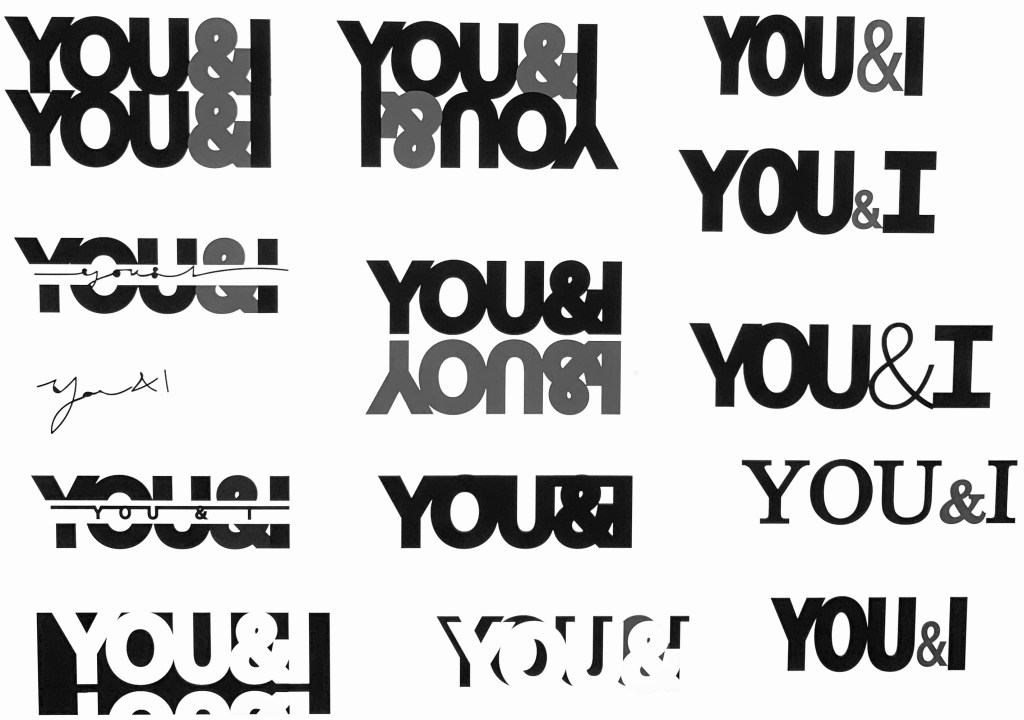
  • I really liked the idea of staying away from cliche images for the logo and decided to experiment with grey to separate and make the logo more interesting which definitely separated the you and I.
  • I working with shadows took away from the type so it was less wordy however wasn’t as successful for putting the meaning across.
  • Nigel liked the logos where the words were connected to show collaboration.
  • I then experimented with different fonts as Nigel said the fonts were a bit boring so I used different sizes and stroke thickness to create different aspects of the logo like different designers.

“THE CHOSEN ONE”

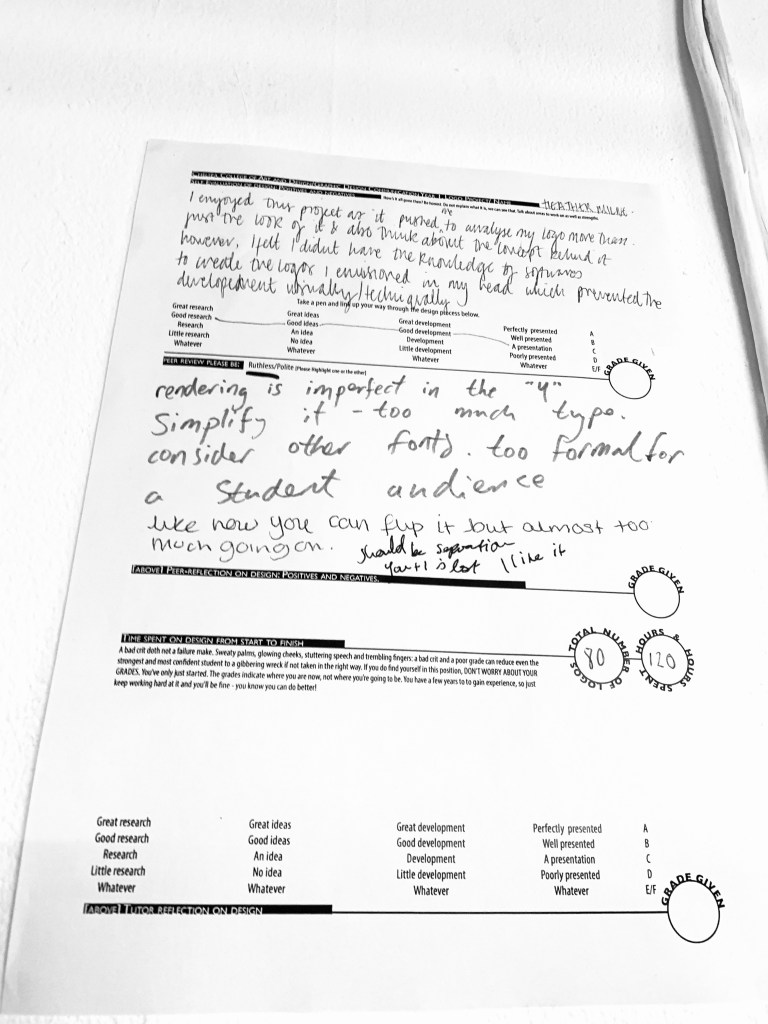
  • From the feedback I learnt that my logo didn’t reach the target audience, I felt it looked successful minus the point where the I and Y connect however it was too formal for the students to remember because u focused on the aesthetic rather than it being interactive.
  • I think my logo looks good however was unsuccessful as it didn’t interact with my peers and the idea behind the logo didn’t resonate with them instantly which logos should.

“LEARNING OUTCOME PROJECT”

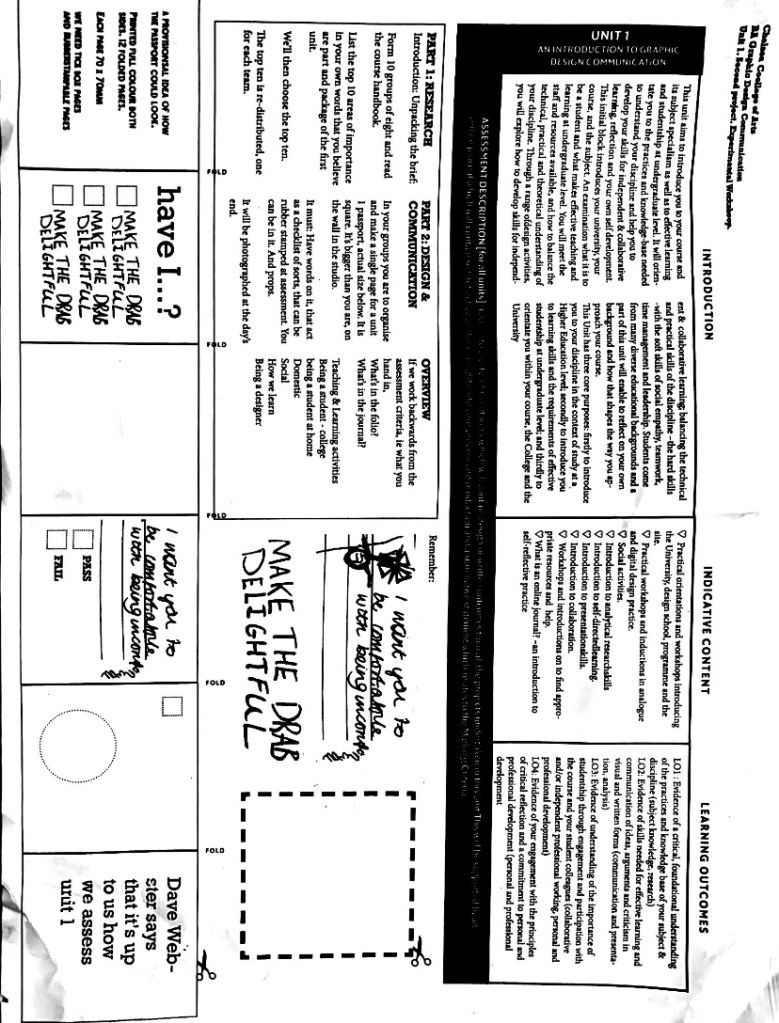
  • In groups we had to read the learning outcomes and chose our top 10 areas which are the most important to think about while working in the first unit.
  • We then as a class narrowed down the best ones from each group to create more memorable and understandable learning outcomes.

THE TOP 10:

  • Plan B
  • Understand graphics
  • Take risks
  • Compromise
  • Have at least £5
  • Document EVERYTHING
  • Attendance is key
  • Criticism is positive
  • Refinement
  • Present
  • We were allocated “thing finder”to represent finding the goal and achieving it for example if your goal is to experiment, find it and do it
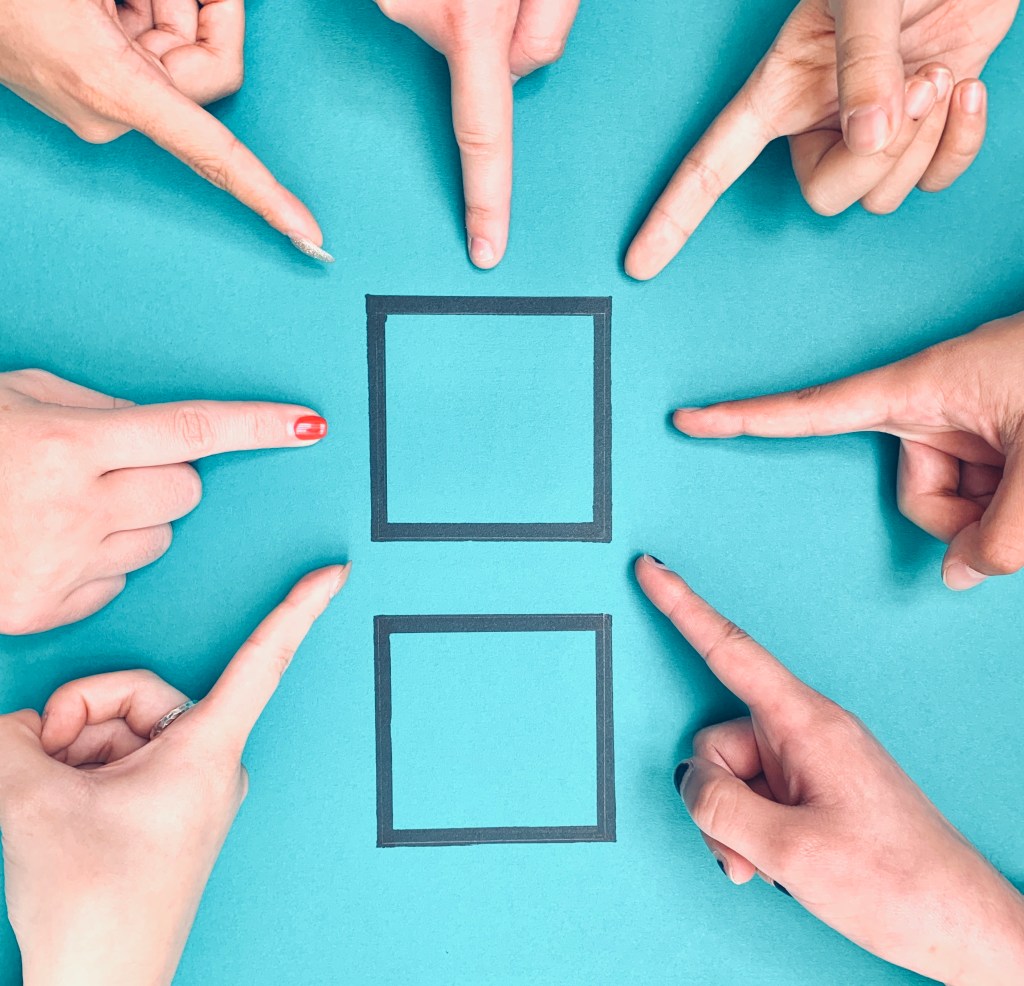
  • This image represents ticking box or getting a stamp as that was part of the criteria (leaving space for a stamp to say whether we have obtained this learning outcome)
  • It also represents the UAL logo, which connects the learning outcomes with the university.
  • At first we struggled to avoid the typical and tacky ideas like a magnifying glass etc, however after different & contrasting opinions from Paula, Paul and Nigel, we decided to simplify it and eventually created a successful image.

“DESTINATION WOW”

EVALUATION:

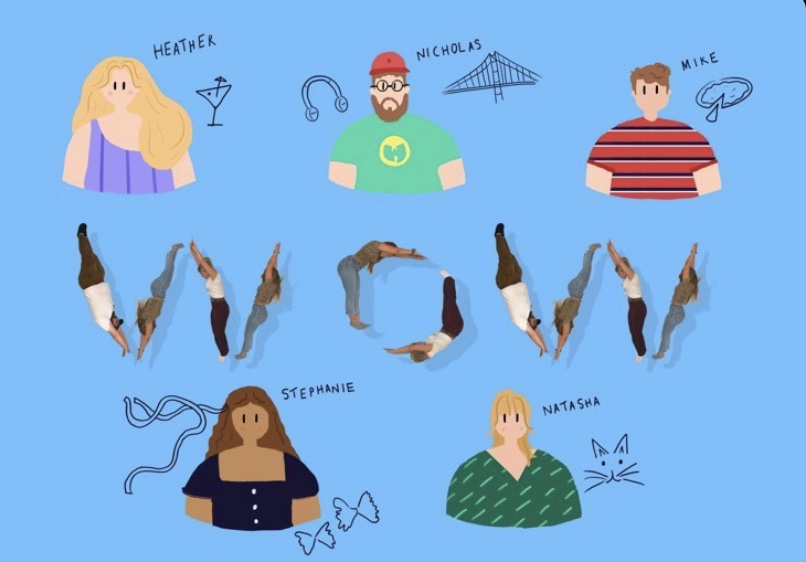
  • I found this project a great way for me to kickstart my creativity. I felt that the group worked well together even though we had different styles and strengths it worked in our favour.
  • Although my slide wasn’t the most creative one, I felt I directed the group and thought of the storyline and design ideas which helped create a fluid presentation that worked and told the story well.
  • The feedback we got from Nigel and Paul was that the best presentations were the ones that had a story as you could see that the team had communicated well together, also the presentations that were more illustrative than photographic, all together more cohesive.

Design a site like this with WordPress.com
Get started